Aluminium Works
Burntisland Aluminium Company started production in the town in 1917. Initially it was designed to produce smelter-grade alumina from bauxite ore imported from Ghana in West Africa. The alumina was then sent to the company’s processing plants at Kinlochleven (opened 1907) and Lochaber, Fort William (opened 1929) where it was converted into aluminium ingots, using locally available hydro-electric power. The final stage was the sending of the ingots to the BAC rolling mill in Falkirk. Although at this time the manufacture of aluminium was the main process, over the years the emphasis shifted away from the metal to the use of the alumina for a variety of purposes, including making paper, abrasives, ceramics, and even light bulbs.
In 1972 the company switched to processing special chemicals, such as aluminium trihydroxide, which was used as a flame-retardant filler in the rubber and plastics industries. Further changes occurred in 1982 when the company was merged with the Aluminium Company of Canada Limited and two years later the name British Aluminium was replaced by the term Alcan.
In 2002 Alcan announced its intention of closing its Burntisland plant, with the loss of around 370 jobs. Production ceased in late 2002, with a £1m fund set aside by Alcan to promote regeneration of the area. As at June 2008, an extensive house-building programme is transforming the site of the old factory, with a total of over 300 houses planned.
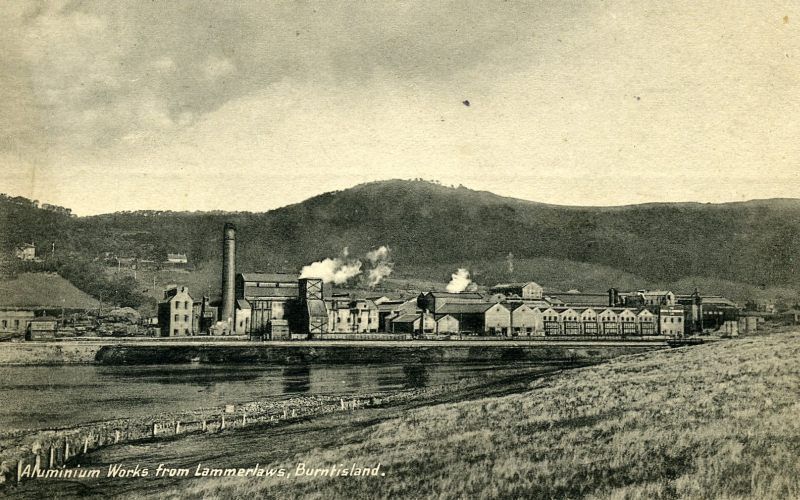
The works around 1918 before construction of the sea wall.
(The caption on the postcard is wrong. It is a photograph of the Aluminium Works, but not from the Lammerlaws.)
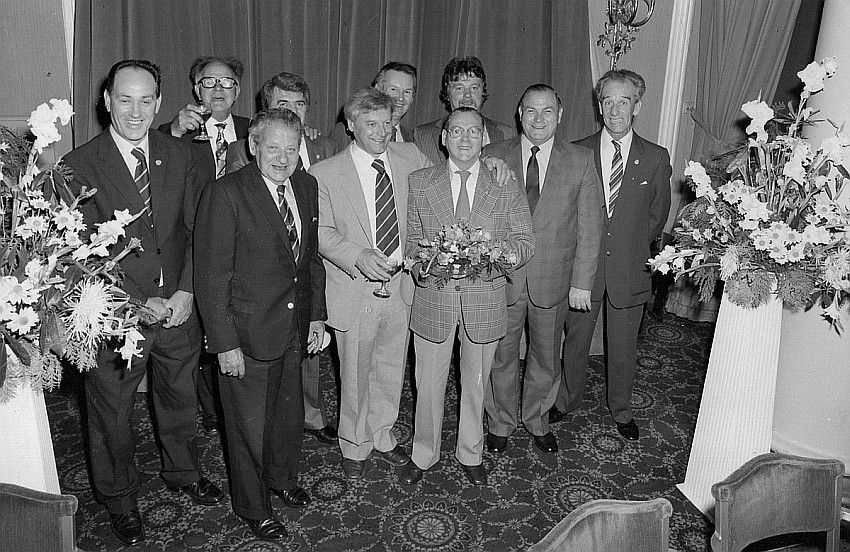
Taken at the British Aluminium 30 Year Club dinner in 1982. Names (from Keddie Law): Front row - W Law, C Jamieson, P Nicol (holding the bouquet), W Hamilton, V Philp. Back row - W Farquharson(?), H Michie, H Ferguson, W Melville, T Murray.
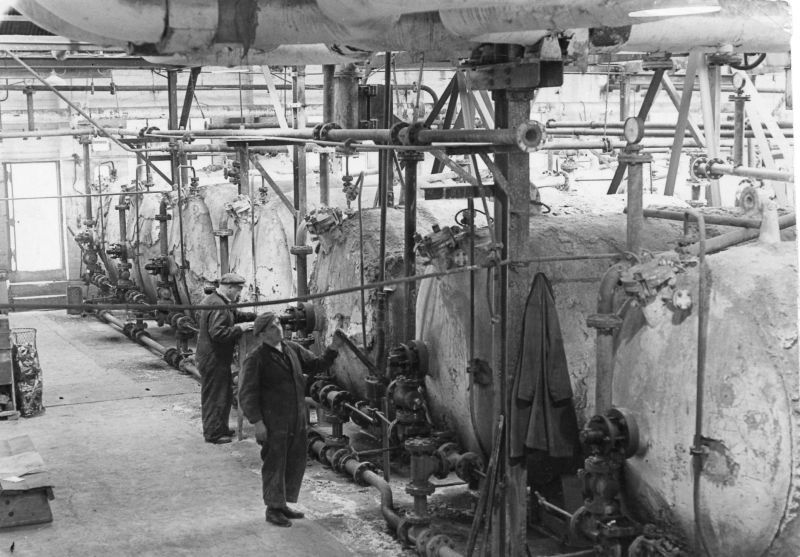
Notes by Clark Christie: Inside the "Ally-Bam". Thomas Christie is nearest the camera, and worked there from leaving the Black Watch at the end of WW1 until his retirement. He worked alongside my Grandpa, who served 39 years at the plant. Interestingly, Thomas was severely injured in the left hand on the same day of the Great War that his brother, my Gt-Grandpa, was killed - 31st July 1917 - and the FFP reported that in detail at the time.
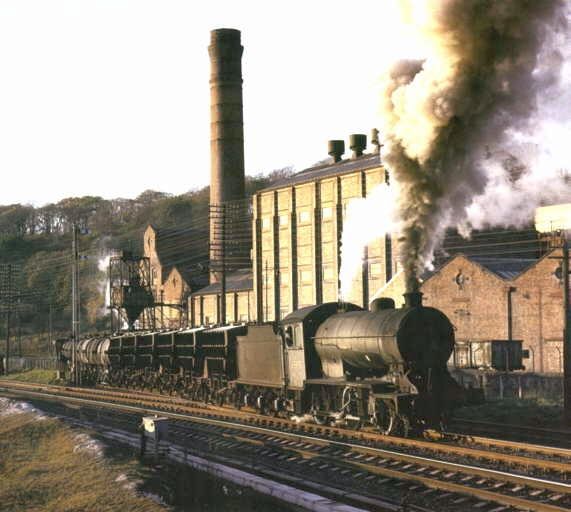
Burntisland’s British Aluminium (later Alcan) plant around the 1960s. Alumina, converted from imported bauxite, was taken to the British Aluminium Company smelters at Fort William and Kinlochleven, where it was made into aluminium ingots, then sent to the rolling mills in Falkirk. The Burntisland plant closed in 2002, and was demolished shortly afterwards.
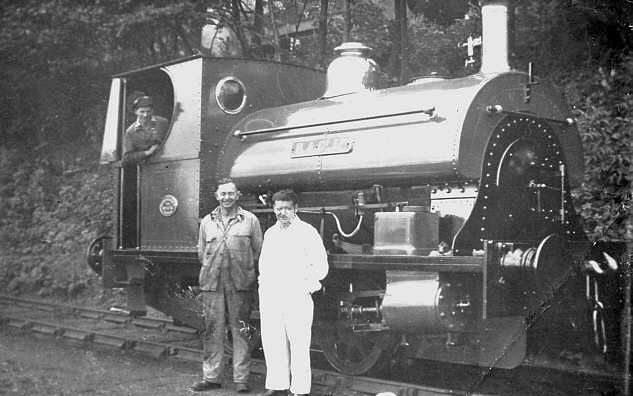
A British Aluminium Company locomotive with, left to right, Willie Wishart (in the cab), Micheal McDonagh and Willie Law (who was a painter to trade). Thanks to Keddie Law and Stewart Soutar for supplying the names.
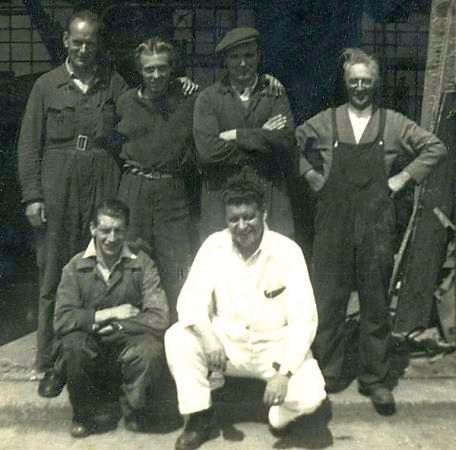
Pictured are a group of workers at the British Aluminium (later Alcan) factory.
Front row, from left, Willie Wishart and Willie Law (both painters).
