Burntisland Kirk Session Records 1633
Transcribed/translated by Gill Paterson & Andrea Morrison 2026
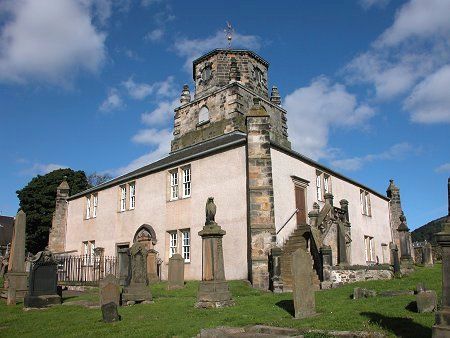
Burntisland Parish Church
The Kirk Session Records are available online at https://www.scotlandspeople.gov.uk. They can be viewed for free but there is a charge to download images. They are not currently indexed so it’s not possible to search online for individual names. Burntisland KS minutes are very challenging to read, being in old Scots Secretary Hand, often scribbled and with idiosyncratic abbreviations. Therefore some of the translations are not verbatim.
The Kirk Session met weekly, comprising the Minister (Mr John Mitchelson[1]) and a number of male Elders who were chosen annually, usually in December to serve the following year. In 1633, there were 31 Elders, most having served for previous years. That year there was an additional list of Elders appointed in January. The Session acted as the local court, its purpose being to keep parishioners in line, often naming and shaming and fining those who had transgressed, most often by fornication. The Session also chastised people for drunkenness, theft, breaking the sabbath or suspected witchcraft. It was a very powerful body with the option of referring serious cases to the Presbytery of Kirkcaldy.
[1] Sometimes written as Michaelson. In 1638 he refused to sign the Covenant, unlike most of his parishioners. He was deposed in 1639.
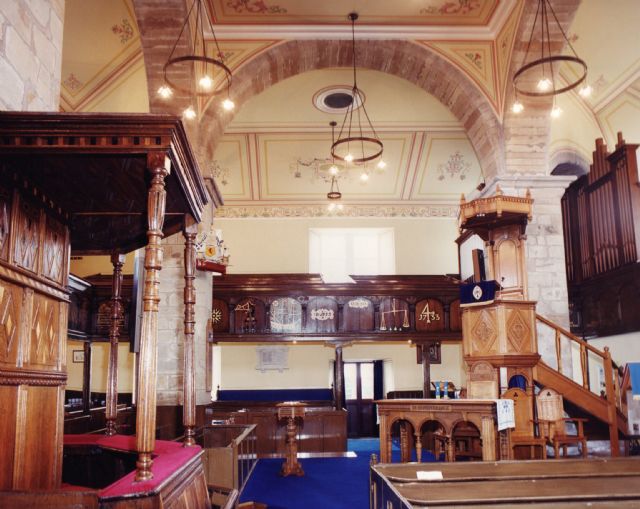
Interior of Parish Church
Despite 1633 being the year that King Charles I and his entourage visited Burntisland, the only entry pertaining to the visit was on July 7 when there was no Session meeting as the Minister was at Falkland where the King was in temporary residence at the Palace. There was no reference to the sinking of the ferry on July 10th or the discovery and burial of dead bodies washed ashore, which were noted in the Burgh Minutes. [1]
Repairs were carried out to the south side of the kirk in May. Payments were made to slaters and wrights; stone, glass and timber was purchased. The wall at the Kirk Wynd and the kirk stiles were mended. Candles and tallow were purchased to light the evening sermons. A new bell rope was acquired. In August the need for repairs to the north quarter of the kirk was identified, to make it watertight – money had to be borrowed to pay for it. In November there were repairs to the steeple and bellhouse.
The Minister, John Mitchelson or Michaelson, was an old man and in April rumours heard in London were reported that his son Andrew was hoping for a presentation as the next Minister, which the current Minister denied knowing anything about. (see Burntisland: Early History and People by John Blyth for more detailed information – Andrew did not succeed his father)
The stipends for the Minister and the Schoolmaster were paid annually. Money was paid out to the poor, donations being received from local landowners. Most of the kirk’s
income came from collections and fines. No less than 13 couples were accused of fornication in 1633, in one case the same man committing the act with 2 different women. The couples often had to kneel on a stool in front of the pulpit for several Sundays to repent, but in many cases they were also fined – a useful contribution to the Kirk’s coffers. Many Kirk sessions in Scotland seem to have been obsessed with calling out fornicators.
[1] National Archive of Scotland Ref B9/12/6. Not available online.
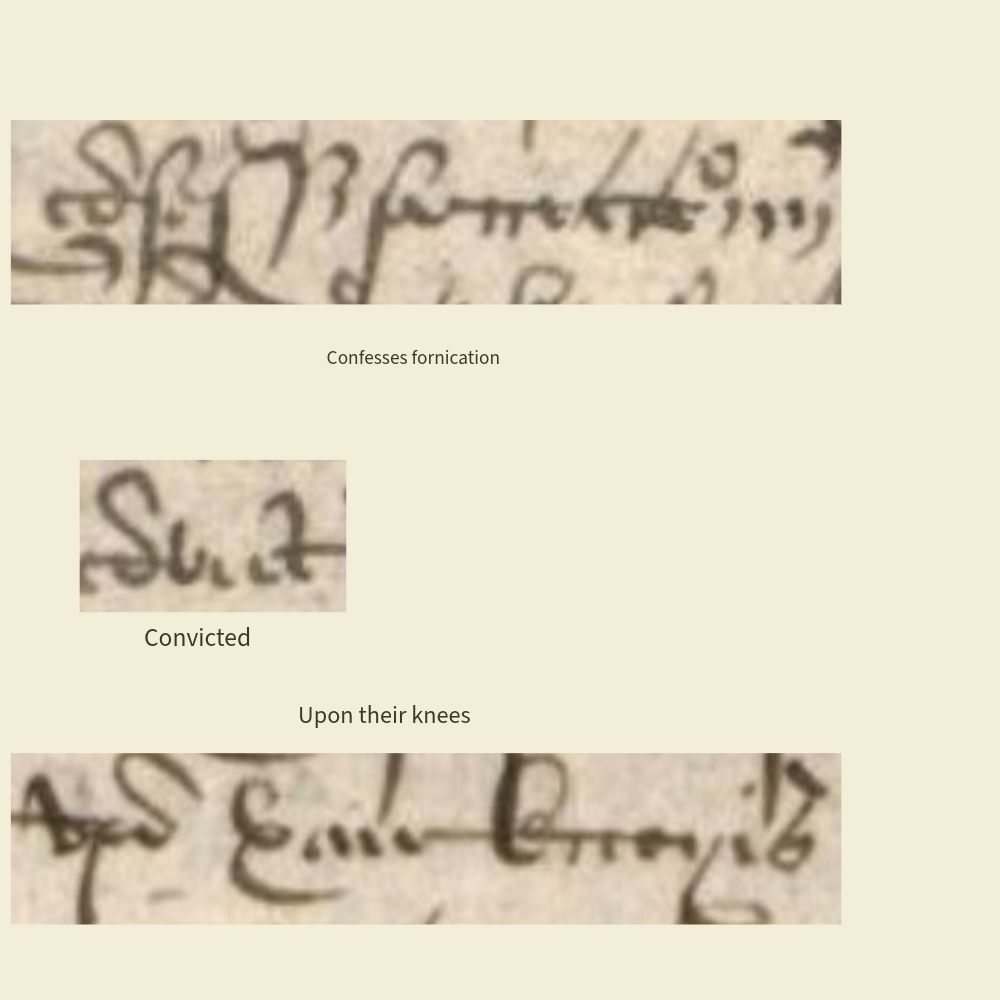
The difficult task of transcribing old @'ecretary hand'.
Many couples appeared repeatedly, the case dragging on for months – for example:
On 10th March David Gourlay confessed to fornication with his maidservant Issobel Orrok. He avoided standing at the cross and stool by paying a fine. Two weeks later he asked the Session to absolve them both as they had repented and should not have to sit out another Sabbath. However, despite David offering further payment, Issobel had to sit on the stool for a total of 4 Sundays. Surprisingly, David Gourlay is listed as an Elder (unless there are 2 men of the same name) and Issobel was a married woman.
From July through to September, Robert Thomson, a married man, was accused of “hanting” Margaret Danyell, visiting her house late at night on several occasions, despite their being forbidden to be be in each other’s company. They were rebuked for adulterous behaviour, and Issobel Orrok and her husband were also rebuked for letting them use their house.
In September, John Wilson was accused of fornication with both Janet Thomson and Barbara Murray. Barbara was actually his wife but she had given birth to his child after only 6 months of marriage, which is considered evidence of pre-marital fornication. John paid a fine, all 3 had to confess, Janet and John split up and he returned to his wife in October.
There were several other similar cases – a veritable soap opera to entertain the parishioners and keep them on the straight and narrow!
Other fines were for swearing at the Minister, calling a neighbour a “bitch of Satan”, and another person “a lying knave”. There was a dispute between 2 bakers. All typical of 17th century Scottish kirk sessions!
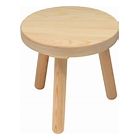
A typical cutty stool
The term “Cutty” or”Cuttie”, comes from the lowland Scots meaning “short”, as in “Cutty Sark”, a short shirt. A Cutty stool is typically a three legged stool with a round seat, making it stable on uneven floors and useful for many household tasks. Sometimes more formally known as “Stools of Repentance”, They were once provided in Presbyterian churches across Scotland for adjudged sinners to sit upon during church services, to publicly repent their sins, in front of their entire community and peer group. Usually, these stools tended to be small, low and single-seated, the type of uncomfortably short circular stool we might think of as used in dairies when milking cows.
